

Toronto has never been shy about building upwards. From the glass towers lining the Financial District to the ambitious developments reshaping the skyline, the city has spent decades chasing the next big thing in vertical living. But in the luxury real estate market, a different kind of status symbol is gaining ground.
Think fewer floors, fewer neighbours and considerably more room to breathe.
Boutique luxury condominiums are carving out a niche among Toronto’s wealthiest buyers, offering an alternative to the traditional high-rise lifestyle. These developments trade sheer height for generous floor plans, thoughtful architecture and privacy. For affluent buyers, the appeal is becoming clear: bigger is not always better.
The Appeal of Living With Fewer Neighbours
There was a time when owning a penthouse in a towering condominium was the ultimate statement of success. Floor-to-ceiling windows, panoramic skyline views and private elevators announced that you had arrived.
Those features still have their place. Toronto’s luxury residential market includes landmark developments such as the Four Seasons Private Residences. Yet some buyers are looking for something that feels less like a five-star hotel and more like a private residence.
Consider the difference between living in a building with hundreds of suites and one with fewer than 100. A smaller development can offer a more discreet atmosphere, fewer people sharing common spaces and a stronger sense of community.
Privacy matters to executives, entrepreneurs, professional athletes and established families. They may appreciate a concierge, underground parking and premium amenities without wanting to share them with hundreds of residents.
Boutique developments can also deliver greater architectural individuality. Rather than another glass tower competing for attention, these buildings can feature distinctive materials, carefully considered proportions and designs that complement their surroundings.
In a market where luxury increasingly means personal experience rather than conspicuous consumption, that distinction matters.
Space Is the New Status Symbol
One of the biggest selling points of boutique luxury condos is their ability to deliver something surprisingly difficult to find in Toronto: substantial living space in a desirable urban neighbourhood.
Many conventional condominiums prioritize location and convenience over square footage. That works for some households, but affluent buyers accustomed to detached homes may want multiple living areas, dedicated offices and room for guests.
For homeowners in Rosedale, Forest Hill and Lawrence Park, downsizing does not necessarily mean wanting less space. It may simply mean wanting less maintenance.
These buyers might be ready to leave behind a large garden and the responsibilities of maintaining an older house. What they do not want to sacrifice is a proper dining room, generous storage or a terrace large enough to entertain.
Boutique residences can bridge that gap. Spacious suites, expansive balconies and carefully designed layouts offer a home-like experience without the workload of maintaining a detached property.
For empty nesters, the appeal is particularly strong. A couple who has spent decades in a family home may want to remain close to familiar restaurants, shops and friends while simplifying daily life.
In Toronto, where location remains a major driver of real estate value, that is a compelling proposition.

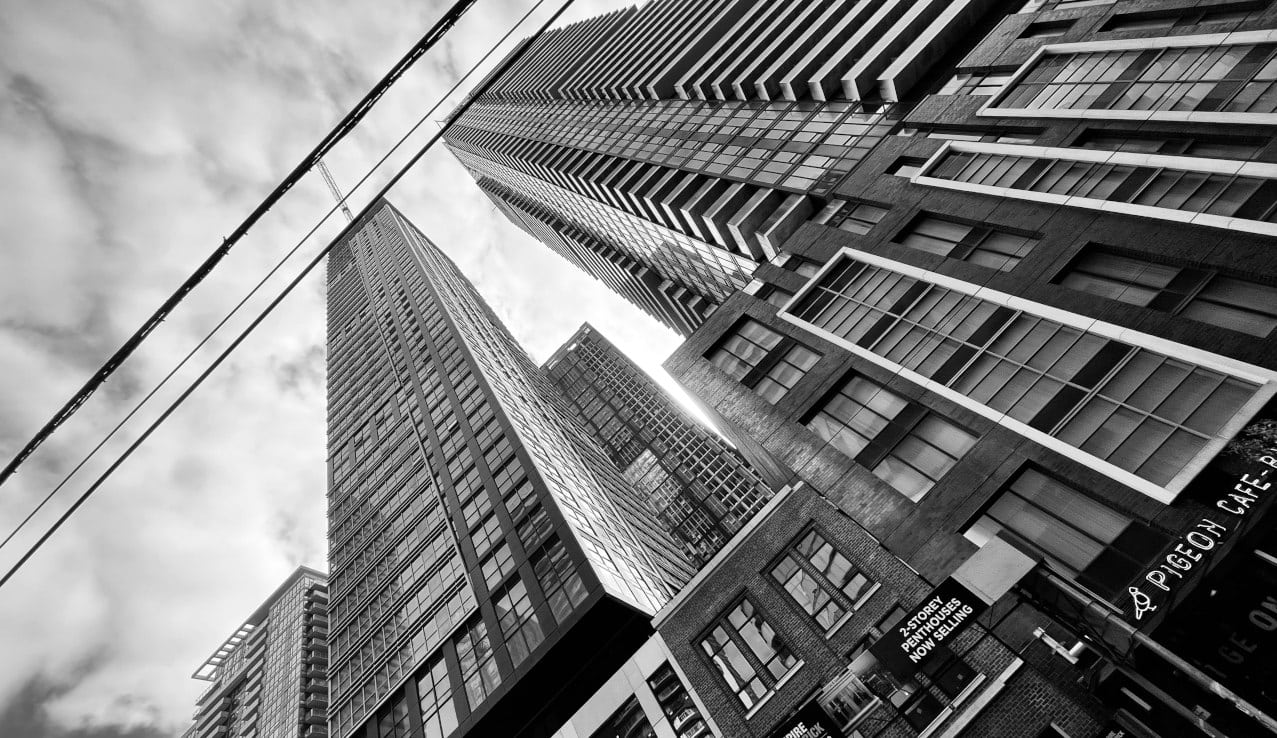
Image by Mark Keast
The Neighbourhood Is Part of the Luxury
Luxury is not simply about what happens behind the front door. It is also about what is within walking distance.
Yorkville offers designer boutiques, upscale restaurants and galleries. Rosedale provides leafy streets, ravines and a quieter residential atmosphere. Lawrence Park combines established homes, green space and neighbourhood amenities.
For buyers who value discretion, a smaller building tucked into an established neighbourhood may be more attractive than a landmark tower surrounded by construction, traffic and crowds.
Many affluent purchasers also value convenience. Walking to dinner, visiting a local café or enjoying a nearby park can be more appealing than relying on a car for every outing.
The best boutique developments do more than insert a luxury building into a neighbourhood. They make a convincing case for why that building belongs there.
Of course, a prestigious address alone is not enough. Buyers should examine construction quality, sound insulation, maintenance fees, reserve fund planning and the condominium corporation’s financial health. An attractive lobby cannot compensate for poor building management.
Luxury should be measured by how well a property performs long after the sales gallery closes.
Toronto’s Mayoral Race Could Shape the Luxury Market
Toronto’s October 26, 2026, municipal election adds another dimension to the real estate story. Incumbent Mayor Olivia Chow and challenger Brad Bradford have different approaches to housing, taxation and development, potentially affecting the economics of future luxury projects.
Chow has emphasized increasing housing supply, particularly affordable homes and purpose-built rentals. Her housing agenda could place greater emphasis on affordability and public benefits in new developments. While these policies do not target luxury condominiums specifically, they can influence project economics, planning decisions and the mix of housing delivered across Toronto. Her approach to property taxes also matters to homeowners concerned about rising carrying costs.
Bradford has campaigned on reducing development costs, speeding up approvals and making it easier to build more housing. His proposed property tax freeze and spending review could appeal to homeowners and developers seeking greater cost certainty. Faster approvals could also help boutique projects move from planning to construction more efficiently.
However, lower development costs do not automatically translate into lower condominium prices, and a property tax freeze is not the same as reducing development charges. The impact will depend on which policies are implemented and how the market responds.
For luxury buyers and developers, the election is worth watching. Municipal decisions can influence construction costs, housing supply and neighbourhood development, although neither candidate’s platform guarantees stronger property values.

Image by Mark Keast
A Different Kind of Exclusivity
In a city increasingly defined by cranes and condominium construction, scarcity itself can become a selling point.
A building with fewer suites can offer a more intimate residential environment. Larger homes within it may appeal to buyers willing to pay for features that are difficult to replicate in a conventional tower.
Still, exclusivity does not guarantee investment performance. Purchase price, location, carrying costs, resale demand and construction quality all matter.
Boutique buildings also have trade-offs. With fewer owners sharing fixed expenses, individual residents may face higher costs. Limited amenities may not suit everyone, either. Buyers should look beyond the marketing and examine the fundamentals.
The Future of Luxury Living in Toronto
Toronto is unlikely to abandon skyscrapers anytime soon. High-rise development remains important to accommodating a growing population, particularly near transit and employment centres. Landmark towers will continue attracting buyers who value spectacular views and downtown energy.
But the luxury market has room for another idea of the perfect home.
For some, it will always be a penthouse overlooking the city. For others, it will be a spacious residence in a discreet building, surrounded by mature trees and established neighbourhood amenities.
The rise of boutique condominiums suggests that Toronto’s luxury market is evolving. Buyers are looking beyond floor counts and flashy amenities to prioritize privacy, space, design and lifestyle.
Ultimately, the most desirable property may not be the one that reaches highest into the sky. It may be the one that gives its owners the greatest sense of home.
And in Toronto’s next chapter of luxury real estate, that could be a very different kind of status symbol.
Top image by Mark Keast

Sean Cooper is the bestselling author of the book, Burn Your Mortgage: The Simple, Powerful Path to Financial Freedom for Canadians. He bought his first house when he was only 27 in Toronto and paid off his mortgage in just 3 years by age 30. An in-demand Personal Finance Journalist, Money Coach and Speaker, his articles and blogs have been featured in publications such as the Toronto Star, Globe and Mail, Financial Post and MoneySense. Connect with Sean on LinkedIn, Twitter, Facebook and Instagram.